Game feel: the small details that make a game satisfying
Two games can have the same rules and feel completely different. The difference is in feedback, timing and dozens of tiny details players never consciously notice.
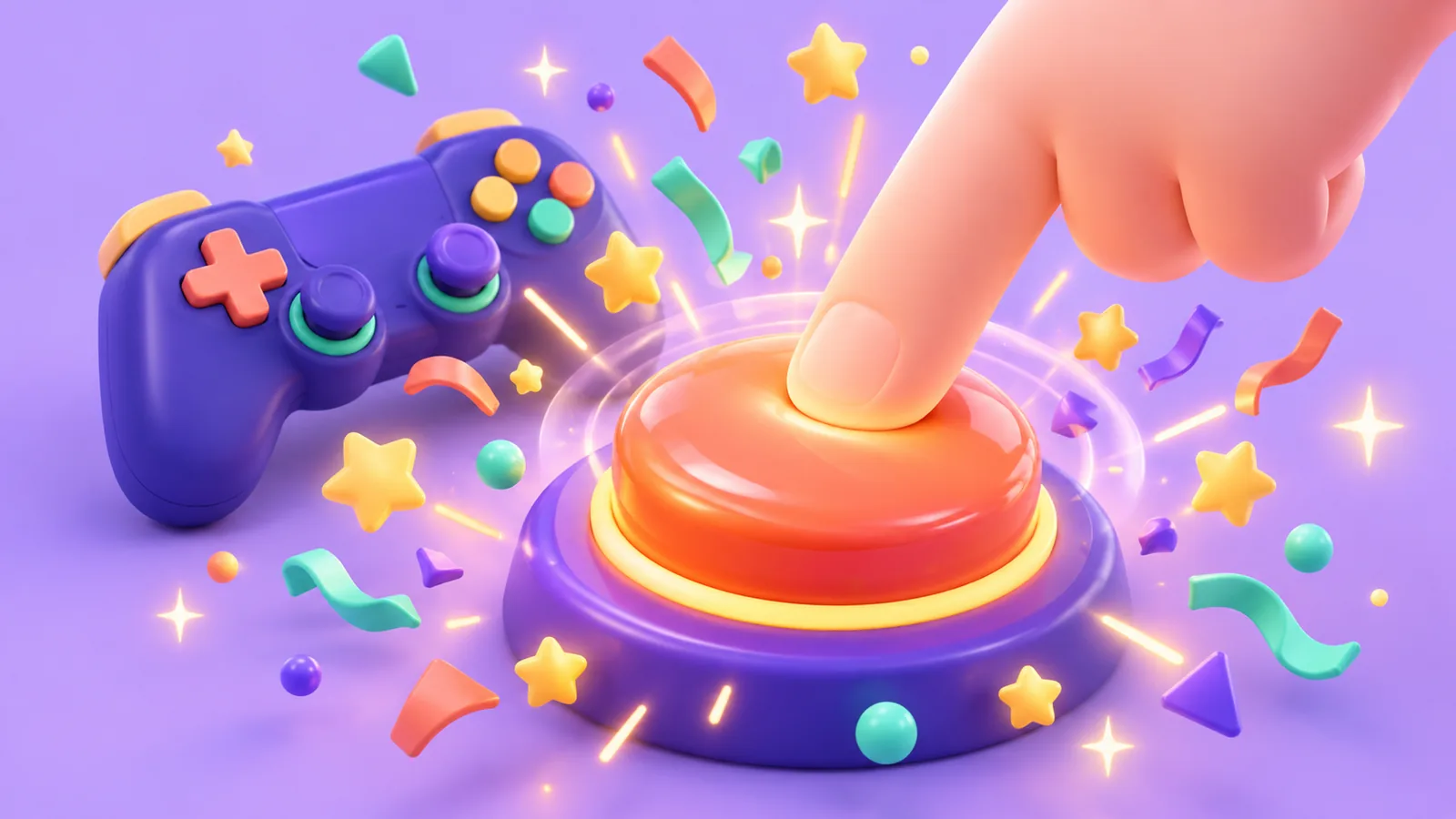
Put two prototypes side by side with identical mechanics. In one, a tap makes a tile disappear. In the other, the tile squashes slightly, pops with a soft sound, sends out a few particles and nudges the camera by a pixel. Players will describe the second one as "fun" and the first as "fine" — even though the rules are the same.
That difference is what designers call game feel, and it is one of the cheapest ways to make a game better.
Every action deserves a reaction
When a player does something, the game should answer immediately and clearly. Good feedback usually stacks several layers at once:
- Visual: a quick scale or squash, a flash, a few particles.
- Audio: a short, pleasant sound that changes slightly in pitch so it never gets repetitive.
- Motion: a tiny camera shake or a bounce in the interface.
- Haptics: a light vibration on phones, used sparingly.
Timing matters more than graphics
Feedback that arrives a tenth of a second late feels sluggish, no matter how beautiful it is. Animations should start the instant the input is received, and they should be short: most hit and tap effects work best well under half a second.
Easing is the other half. Movements that accelerate and settle naturally feel alive; linear movement feels mechanical. A small overshoot — going slightly too far and bouncing back — adds a lot of personality for almost no cost.
Reward the moments that matter
Not every action should explode with effects. If everything is loud, nothing stands out. Keep everyday actions light and save the big celebration for real achievements: a combo, a cleared level, a rare drop. Contrast is what makes those moments feel special.
Test it with your eyes closed
A simple exercise: play the game with the sound on and your eyes half closed. Can you tell what happened just from the audio and the rhythm? If yes, the feedback is doing its job. Then try it with the sound off — the visuals should still carry the moment on their own.
Polish is not the last step. Add basic juice to the prototype so you can judge whether the core loop is really fun.
Game feel will not save a game with a weak core idea. But a good idea without it will always feel unfinished, and players can tell within seconds.